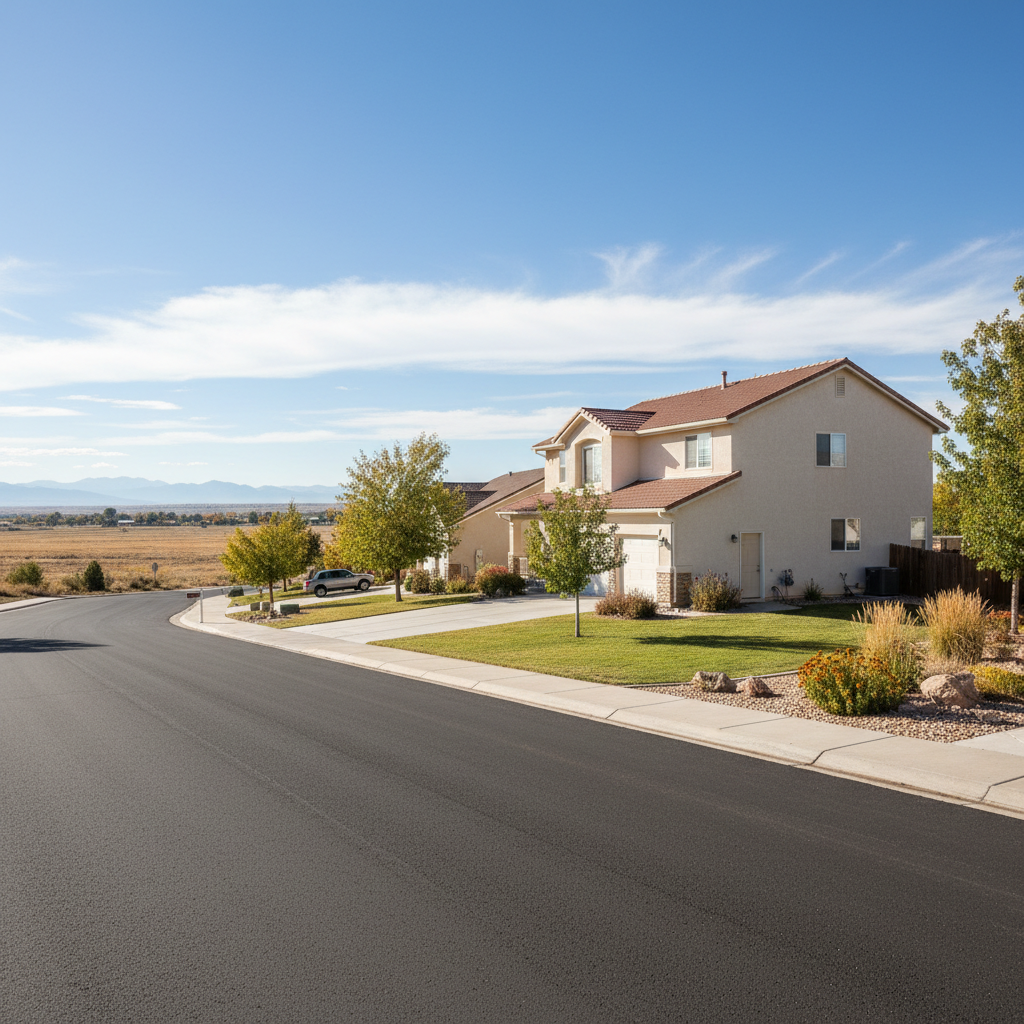
You've seen it, I've seen it. That spiderweb cracking, those potholes that seem to appear overnight. It's a common sight on residential driveways all over Greeley, from the older homes near the university to the newer builds out by Centerra. And if you're like most folks, you're probably wondering why your asphalt seems to be giving up the ghost sooner than you'd expect.
The Greeley Factor: What's Beating Up Your Driveway?
It's not just bad luck, I promise you. There are a few key things that make asphalt paving in Greeley a bit trickier than in other places. First off, we've got that crazy freeze-thaw cycle. One day it's 60 degrees and sunny, the next it's 20 and snowing. Water gets into those tiny cracks in your asphalt, freezes, expands, and then thaws, leaving a bigger crack. Repeat that a few dozen times over a winter, and you've got some serious damage.
Then there's our soil. We've got a lot of expansive clay soils around here, especially in areas like west Greeley. This stuff swells when it gets wet and shrinks when it dries out. That constant movement under your driveway puts a ton of stress on the asphalt above it. If your sub-base wasn't properly prepared or compacted when the driveway was first laid, you're going to see those cracks and dips show up a lot faster.
Another thing I see a lot is heavy vehicle traffic. Maybe you've got an RV you park in the driveway, or you're always getting deliveries from big trucks. Asphalt is tough, but it's not indestructible. Constant heavy loads in the same spots will wear it down, create ruts, and accelerate cracking.
Common Residential Asphalt Problems We Tackle
So, what kind of issues do we usually fix for homeowners around here? It's a pretty consistent list:
- Alligator Cracking: This looks like a mosaic or alligator skin. It's usually a sign of base failure or fatigue from heavy loads. You see this a lot on older driveways that haven't been maintained.
- Potholes: These are those deep, bowl-shaped holes. They start small, often from a crack, and then water gets in and traffic breaks away the surrounding asphalt. They're not just ugly; they're a trip hazard and can damage your car.
- Ruts and Depressions: These are long indentations where tires consistently drive. Again, often due to heavy traffic or a weak sub-base that's settled over time.
- Edge Cracking: Cracks along the edges of your driveway. This happens when the asphalt isn't properly supported at the sides, or if heavy vehicles are constantly driving too close to the edge.
- Fading and Disintegration: Over time, the sun's UV rays and oxidation can make your asphalt brittle and faded. It loses its flexibility and starts to crumble. Sealcoating helps prevent this, but if it's too far gone, you're looking at repair or replacement.
When to Repair, When to Replace
This is the big question, right? For minor cracks and small potholes, patching and crack filling can extend the life of your driveway significantly. If you catch them early, it's a relatively inexpensive fix. A good sealcoat every few years also does wonders for protecting your investment, especially against our harsh sun and those freeze-thaw cycles.
But if you've got widespread alligator cracking, deep ruts, or multiple large potholes, you're probably looking at a bigger project. Sometimes, you can get away with an asphalt overlay, which is essentially putting a new layer of asphalt over the old one. But if the underlying base is shot, or if the driveway is really uneven, a full removal and replacement is usually the best long-term solution. It's more upfront, but it'll save you headaches and money down the road because you won't be patching the same spots over and over.
Why Local Expertise Matters for Your Greeley Driveway
You can call any paving company, sure. But finding one that actually knows Greeley's specific challenges? That's key. We've been working on driveways here for years. We know about the expansive clay soils, the crazy weather swings, and the common issues that pop up in different neighborhoods. When Primetime Paving Co. comes out to give you an estimate, we're not just looking at the surface; we're thinking about what's happening underneath and how our climate affects it.
We know that a driveway in the older, established areas of Cranford Park might have different base issues than a newer home in Promontory. We also understand the importance of proper drainage, especially with our sudden heavy rainfalls, to keep water from undermining your asphalt. It's not just about laying down hot mix; it's about understanding the environment it's going into.
So, if your driveway is starting to look more like a patchwork quilt than a smooth surface, don't ignore it. Get someone out there who understands what's going on under your feet, and they can help you figure out the best way to get that asphalt looking good and lasting long.
Maintaining Your Investment
Once you've got a good, solid driveway, you want to keep it that way. Regular cleaning, sealing those small cracks as they appear, and sealcoating every 2-3 years will make a huge difference. It's like anything else – a little preventative maintenance goes a long way. Don't wait until it's a major problem; tackle those small issues before they become big, expensive ones.